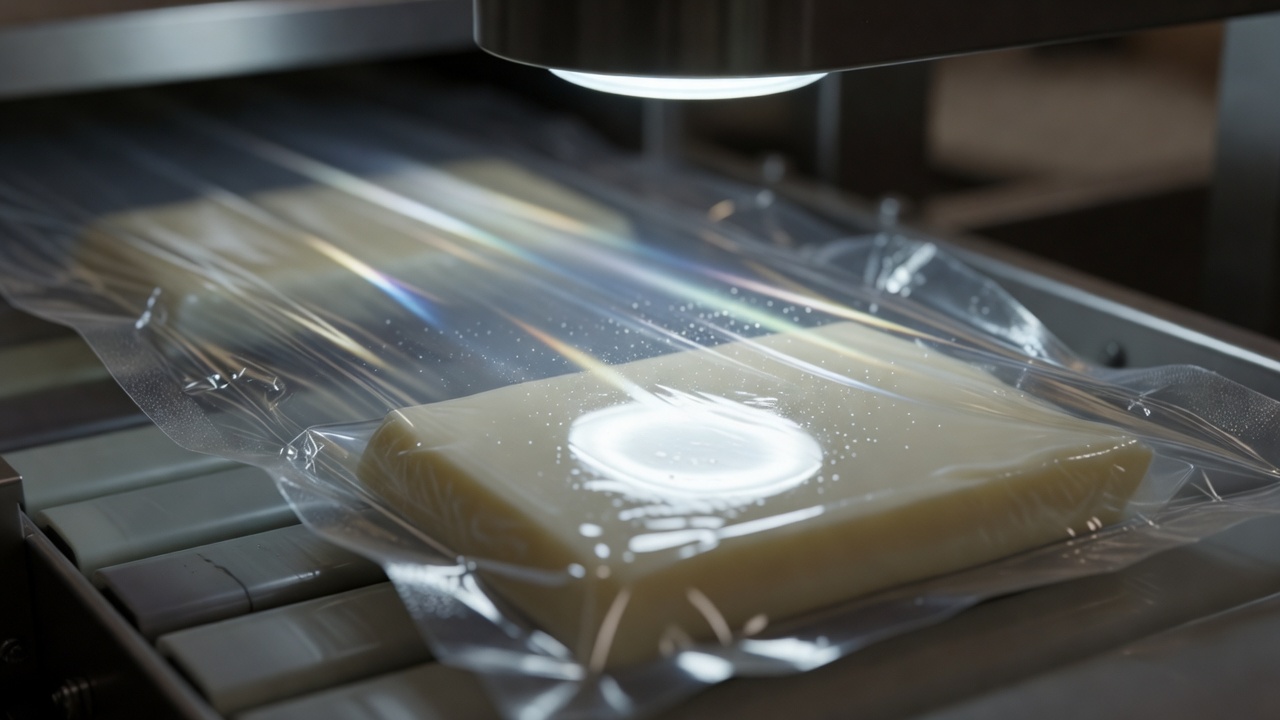
Decide which view supplies the evidence
At the checkpoint, an acceptable product and a defective one may differ only by a small edge or a shallow surface depression. Before choosing a sensor, identify where that difference is visible. A top view cannot prove that the underside is intact. A single image cannot reliably resolve an area hidden beneath another portion.
Map each criterion to a view and record what remains unobserved. Product spacing, guides and orientation may improve coverage more effectively than a larger model. Where multiple views are necessary, establish how they belong to the same item. Additional cameras increase coverage only if their images remain correctly associated with the physical product.
Choose light for the feature, not the photograph
Diffuse illumination can reduce harsh reflections on shiny packaging. Low-angle illumination can emphasise texture or raised edges. Backlighting can make a silhouette easier to measure. These methods solve different problems, and a visually dramatic image is not necessarily a useful inspection image.
Test representative wet, dry, light and dark products under the proposed geometry. Polarisation may reduce some reflections, but its value depends on the material and optical arrangement. Enclose or shield the inspection zone where practical so daylight and nearby indicator lights do not become uncontrolled inputs. Keep a record of light position, intensity, controller settings and any synchronised strobe timing.
When colour is a criterion, stabilise illumination and camera processing. Automatic white balance and automatic exposure can move the apparent colour distribution between otherwise comparable items. A reference target helps detect change, but must be used under a documented procedure and kept in suitable condition.
A visually dramatic image is not necessarily a useful inspection image.
Budget pixels and time together
Field of view determines how many image samples describe a feature. Lens quality, focus, contrast, motion and noise then determine whether those samples contain useful information. Do not equate a sensor's advertised pixel count with a guaranteed minimum detectable defect. Test the smallest relevant feature at the least favourable location in the view.
Motion blur depends on product movement during exposure. In a simple example, a belt moving at 1 metre per second travels 1 millimetre during a 1 millisecond exposure. Whether that is acceptable depends on image scale and the criterion. Shorter exposures may require more illumination, and strobing introduces its own timing and equipment constraints.
Sensor behaviour also matters. Rolling-shutter distortion can affect moving geometry; a global shutter may be more suitable for some line conditions. Depth of field must accommodate expected product height without hiding the required detail. Lock focus and mounting adjustments after qualification, and record the physical setup so maintenance can restore it.
Install for the actual factory
Food environments add washdown, grease, flour dust, vibration and condensation. A clean laboratory window can become a cloudy production window within a shift. Include access for cleaning, inspection and replacement without creating a contamination trap or requiring an unsafe reach across moving equipment.
The European Hygienic Engineering & Design Group (EHEDG) publishes hygienic design guidance. ISO 14159 addresses hygiene requirements for machinery design, while EN 1672-2 concerns food machinery hygiene and cleanability. IEC 60529 defines enclosure ingress-protection classifications; an IP rating alone does not establish hygienic design or chemical compatibility with a cleaning regime.
For camera comparisons, the European Machine Vision Association publishes EMVA 1288 for characterising image sensors and cameras. GenICam standardises aspects of camera interfacing. Such standards support engineering choices, but neither certifies your complete food inspection application.
Monitor whether inspection is still possible
Treat image usability as an operating condition. Monitor failed triggers, clipped brightness, out-of-focus views, unexpected positions and obscured windows where those checks can be validated. A model's confident answer should not override evidence that the image itself is unsuitable.
Save a documented baseline and repeat practical checks after cleaning, maintenance, recipe changes or lighting replacement. Define when production must hold, divert or request review because a usable image is unavailable. Once the image is repeatable, the next task is to make sure its result reaches the correct item on the line.